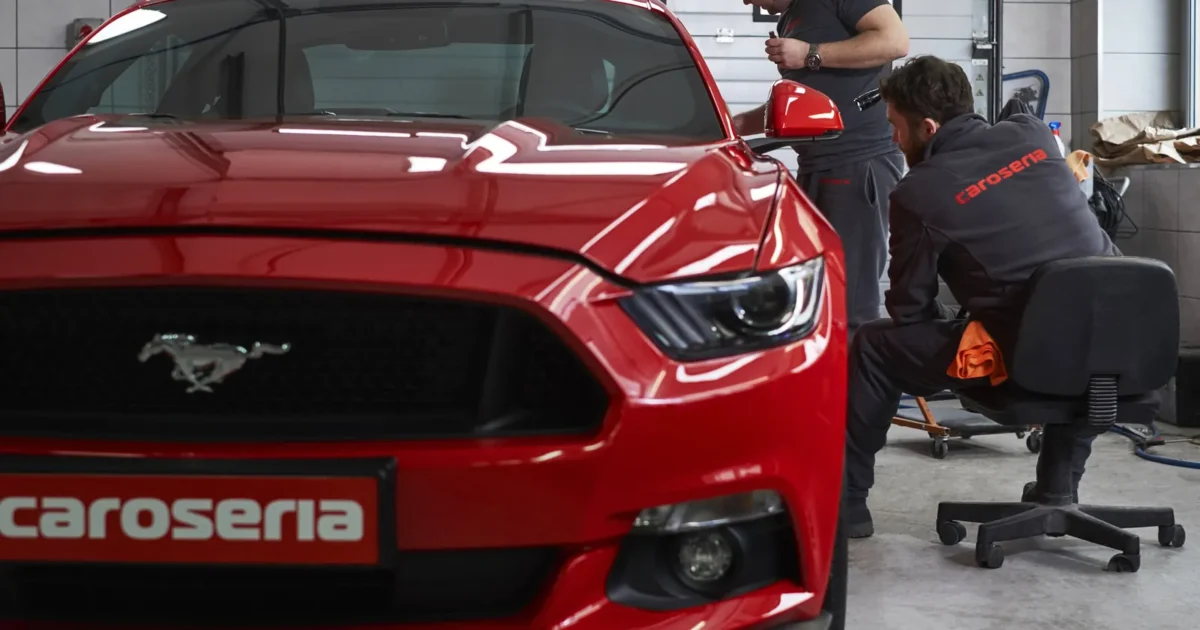
Do you see fine circles all over your car’s paint when the sun hits it? Those are swirl marks, and paint correction is how a detailer gets rid of them.
The problem is that prices are all over the place. One shop says $350, another says $1,500, and it is hard to know what you are paying for.
So in this guide I will show you what real detailers charge, what each level of correction gets you, and which one your car actually needs.
What Is Paint Correction?
Paint correction is not a wash or a wax. The detailer uses a machine polisher to level the top layer of your clear coat, so the marks in it are polished away instead of just covered up.
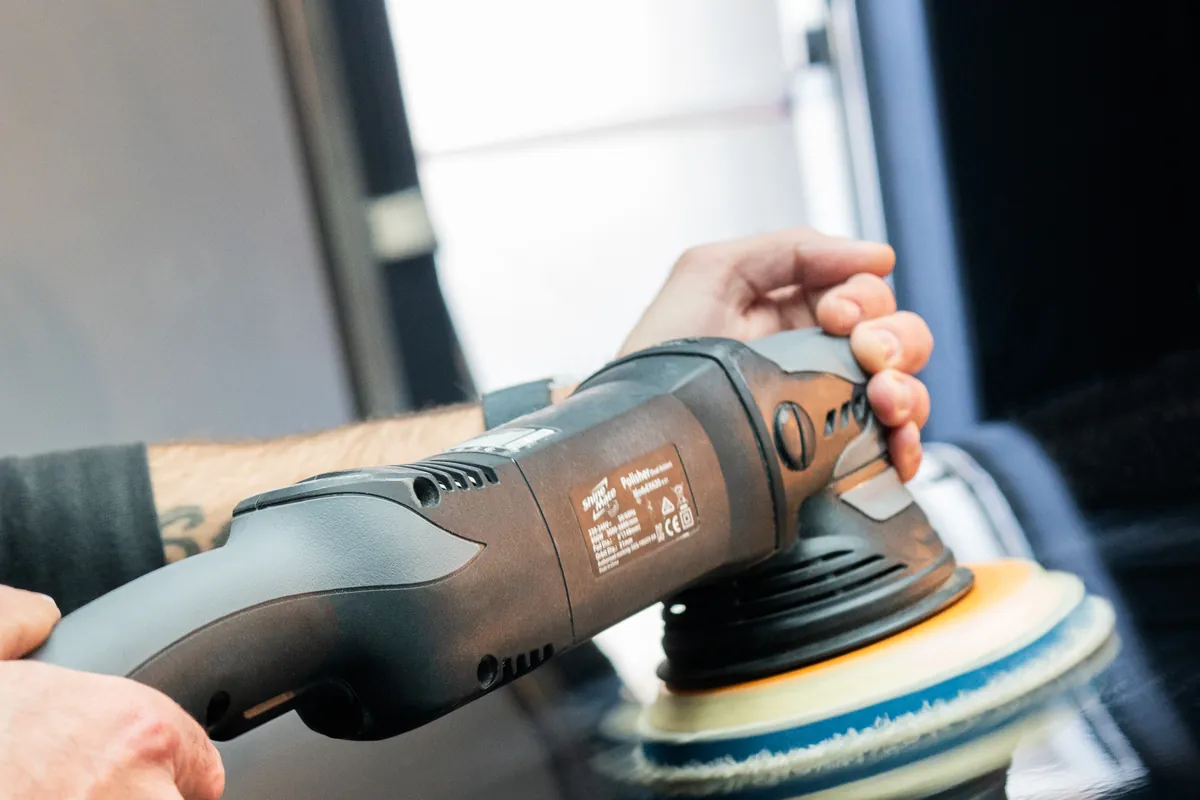
Think of it like sanding a scratched wooden table. You take off a very thin layer, and the surface underneath is smooth again. That is also why it is done in stages: more passes remove more marks, but each pass takes time.
It can fix:
- swirl marks from washing and drying the wrong way,
- light scratches and haze,
- oxidation and fading, where the paint looks dull or chalky,
- etching from bird droppings, bugs and tree sap.
Deep scratches that go through the clear coat are a different story. Those need touch-up paint or a body shop, not polishing.
How Much Does Paint Correction Cost?
I looked at the prices five detailers publish on their own websites. Here is what each charged for a 1-step on a sedan on October 3, 2026, with their bigger jobs underneath:
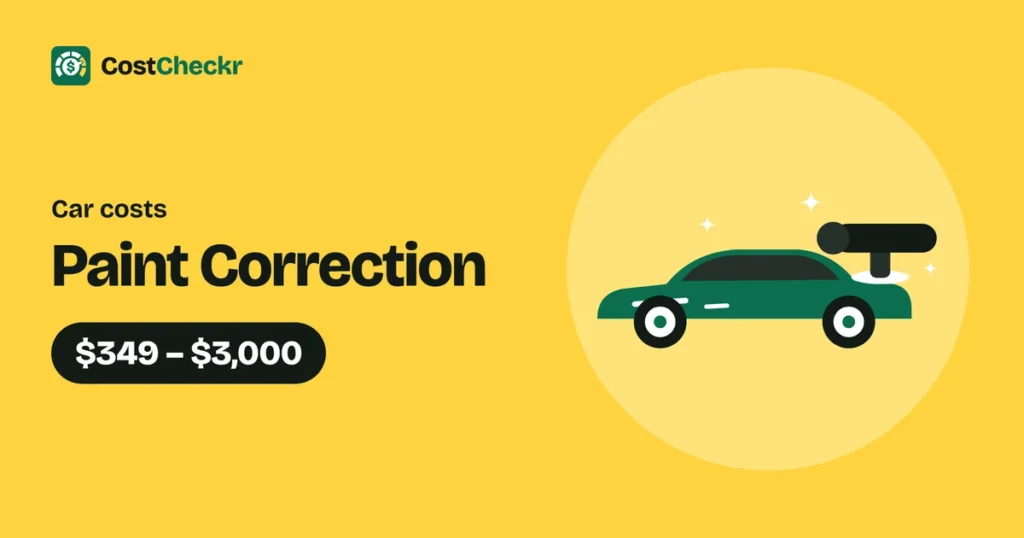
So for a normal car, a 1-step correction is about $350 to $600 and a 2-step is about $600 to $1,500. A full 3-step correction starts around $800 and can pass $3,000 on badly damaged paint.
Bigger vehicles cost more because there is more paint to polish. Wash Doc and My Detail Buddy both add $100 for an SUV and $200 for a large truck, and Aqualine adds $50 to $200.
Work out your price
Built from Wash Doc Auto Detailing's published prices in Texas, October 3, 2026. Other shops can be cheaper or pricier, see the table above.
1-Step, 2-Step or 3-Step: Which One Do You Need?
Aqualine explains the difference in hours, which is the easiest way to understand it, because labor is almost the whole price.
- A 1-step polish takes 4 to 6 hours and removes about 60% to 70% of the swirls, light haze and minor oxidation.
- A 2-step correction takes 8 to 12 hours. A cutting pass removes the deeper marks and a second pass brings the gloss back. It removes about 85% to 95% of the defects.
- A 3-step correction takes 15 to 20 hours or more and is for heavy oxidation, deep marring or soft paint on exotic cars.
For a daily driver with light swirls, I would start with a 1-step. Aqualine makes a good point here too: on a lease you are handing back soon, or a car you are about to sell, a 1-step gives you most of the look for less money.
Save the 2-step for paint you plan to keep and protect.
Before you book, ask the detailer to look at your car first. A good one will tell you if a 1-step is enough.
Watch Out for the $99 Buff
Some cheap “paint correction” deals are really a quick polish with a glaze that fills the swirls instead of removing them. Shine Design warns that it looks the same in the parking lot, then the swirls come back after a few washes.
So ask what the shop actually removes, and how many hours it will spend on your car. If a 2-step quote is far below the prices above, that is your answer.
Adding a Ceramic Coating
A ceramic coating is often sold with the correction, to protect the fresh paint. It adds a lot to the bill:
If you are paying for a long-lasting coating, do not skimp on the correction under it. The coating locks in whatever the paint looks like on that day, swirls included.
How to Keep Your Paint Looking Good After
Swirl marks mostly come from washing and drying, so the way you wash matters more than anything:
- Wash by hand with two buckets, one for soap and one for rinsing the mitt.
- Dry with a clean microfiber towel, not an old bath towel or a chamois.
- Skip automatic car washes with brushes.
- Wash off bird droppings and bug splatter quickly, before they etch the paint.
- Wax or seal the paint every few months if you do not have a coating.
Also Read: How Much Does Chrome Dipping Rims Cost
FAQs on Paint Correction Cost
How much does paint correction cost?
About $350 to $600 for a 1-step and $600 to $1,500 for a 2-step on a normal car, going by five detailers’ published prices on October 3, 2026. A 3-step starts around $800.
How long does paint correction take?
About 4 to 6 hours for a 1-step, 8 to 12 hours for a 2-step and 15 hours or more for a 3-step, according to Aqualine Performance in Las Vegas.
Is a 1-step correction enough?
For most daily drivers with light swirls, yes. A 2-step is worth it when the paint has deeper marks and you plan to keep the car.
Does paint correction remove deep scratches?
No. If a scratch goes through the clear coat, it needs touch-up paint or a body shop.
Does an SUV or truck cost more?
Yes, because there is more paint. Two of the shops we checked add $100 for an SUV and $200 for a large truck.
Should I get a ceramic coating too?
It protects the corrected paint, but it adds a lot. At Wash Doc a 1-step with a 1-year coating starts at $600 for a sedan, against $500 without it.
Where These Prices Come From
- Aqualine Performance, Las Vegas, Paint Correction Cost in Las Vegas, 2026.
- Rocky Mountain Auto Styling, Denver, Paint Correction Prices, checked October 3, 2026.
- Shine Design, Arizona, Stage 1 vs Stage 2 vs Stage 3 Paint Correction Cost, checked October 3, 2026.
- My Detail Buddy, Charlotte, Paint Correction Cost: 1-Step vs 2-Step, March 6, 2026.
- Wash Doc Auto Detailing, Haltom City, TX, How Much Does Paint Correction Cost?, checked October 3, 2026.
I hope this helps you pick the right level for your car and spot a fair quote. If you have any questions, you can email me at costcheckr@gmail.com.