You have a quote to seal the crawl space, and another to put plastic over the dirt. They may both promise a drier house, but the work behind those totals can be quite different.
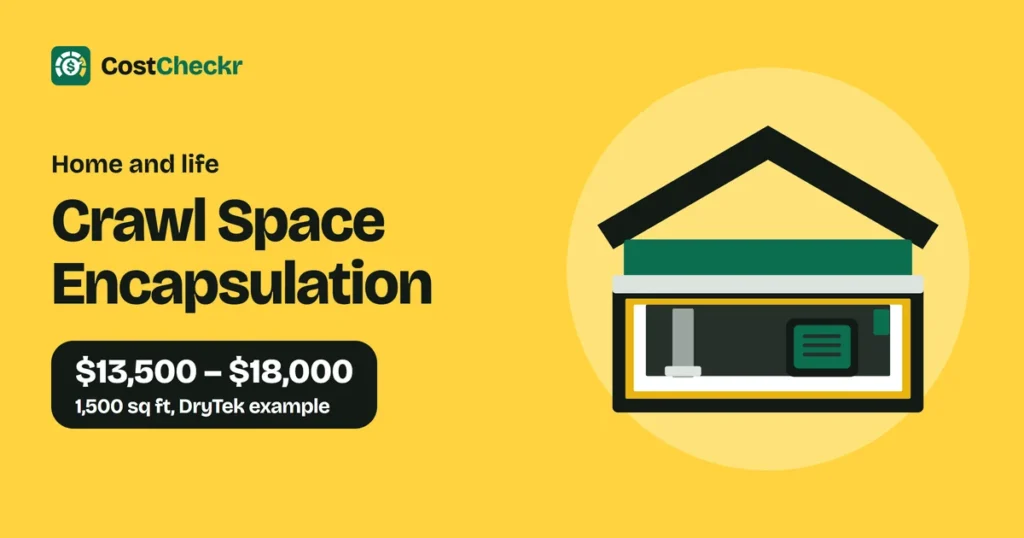
So crawl space encapsulation costs $13,500 to $18,000 or more for a 1,500-square-foot home in DryTek Crawlspace Solutions’ Delmarva pricing guide. Its separately published area rate is $9 to $13 per square foot.
Those are one contractor’s regional prices, checked October 24, 2026. I will walk you through the liner, sealed openings, humidity control and the details that can make two proposals hard to compare.
What Are You Paying to Seal?
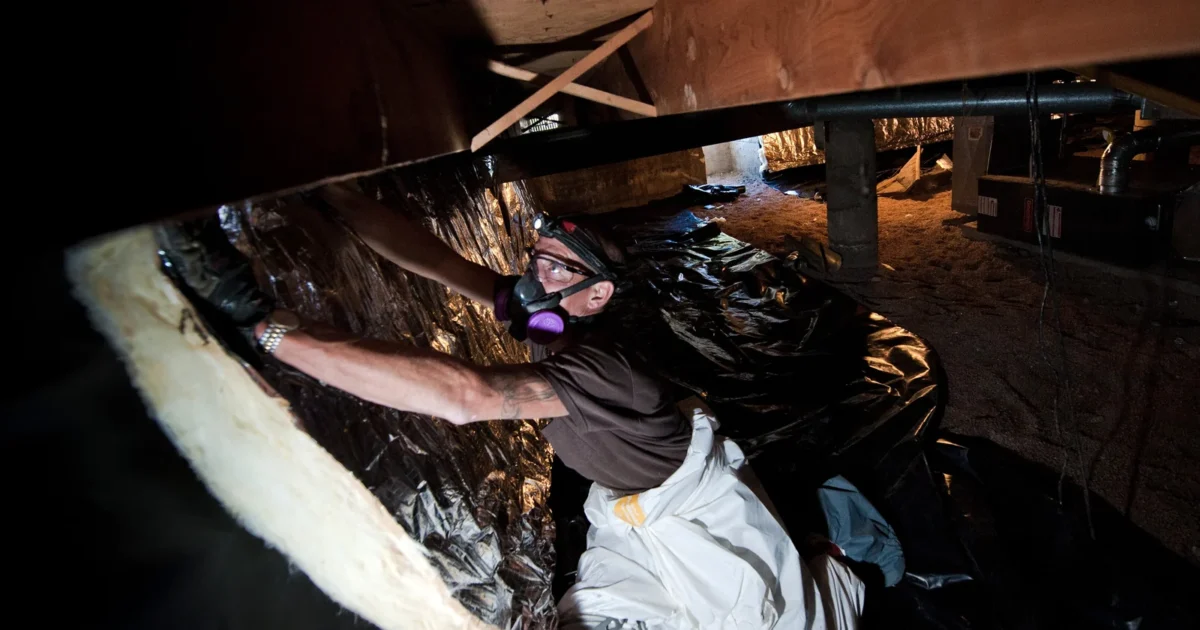
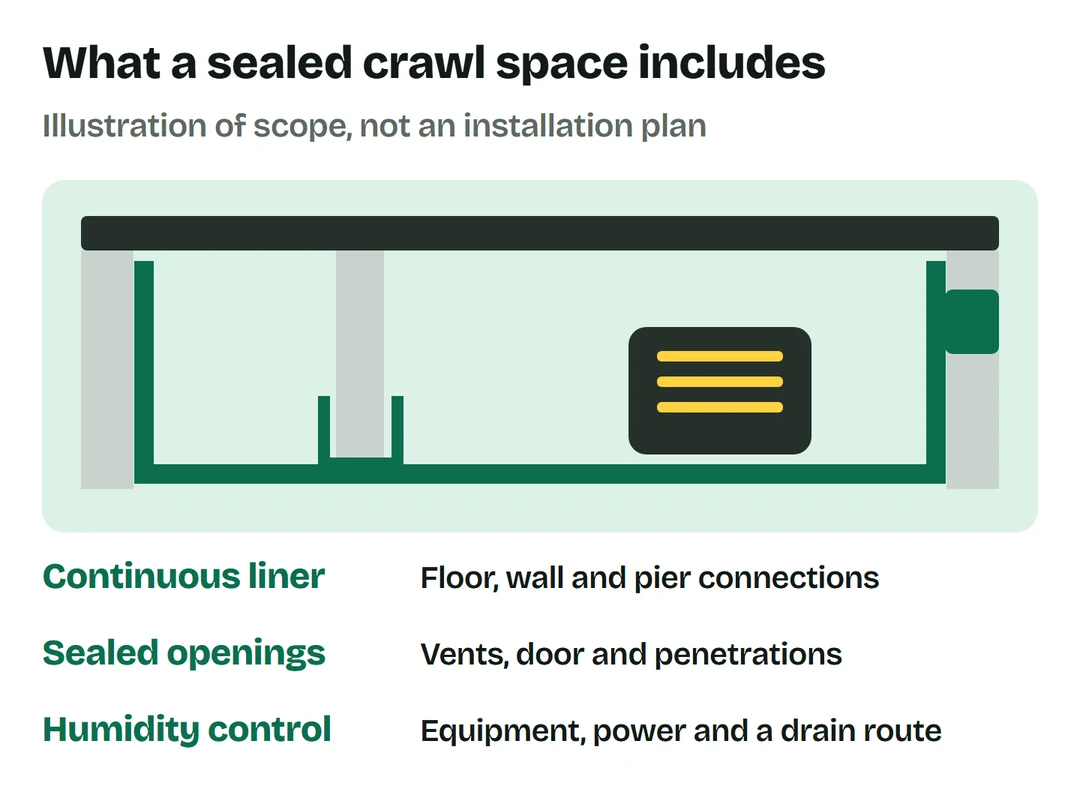
A ground sheet covers the soil. Full encapsulation connects that ground cover to the foundation walls and piers, seals the seams and openings, and includes a plan for keeping the enclosed air dry.
The Department of Energy describes a continuous ground barrier sealed around pipes and attached at walls and piers. Loose plastic with open edges leaves paths for moisture to enter.
Ask the installer to show the liner route on a sketch. It should be clear where the floor sheet meets the wall material, how columns are wrapped, and what happens at vents and the access door.
Wall insulation is another part of the design. A liner and insulation do different jobs, even when a contractor combines them in one wall system. Ask which material is included and where it will go.
If the inspection found damaged beams, joists or supports, our crawl space repair guide covers that separate work. A sealed liner cannot restore damaged wood.
Encapsulation Cost Per Square Foot
DryTek serves the Delmarva Peninsula in Delaware, Maryland and Virginia. Its October 15, 2026 pricing page gives these planning figures:
DryTek publishes both figures, but their endpoints differ. For the 1,500-square-foot home, its stated project range is $13,500 to $18,000 or more.
Do not automatically add the equipment rows to an encapsulation quote. Ask whether your quote already includes the unit and circuit. DryTek’s summary does not itemize the contents of every project in its range.
Its pricing also depends on soil preparation, water entry and clearance. A low crawl space takes longer to work in, even when its floor area matches a taller one.
Floor Area Is Not the Whole Material Order
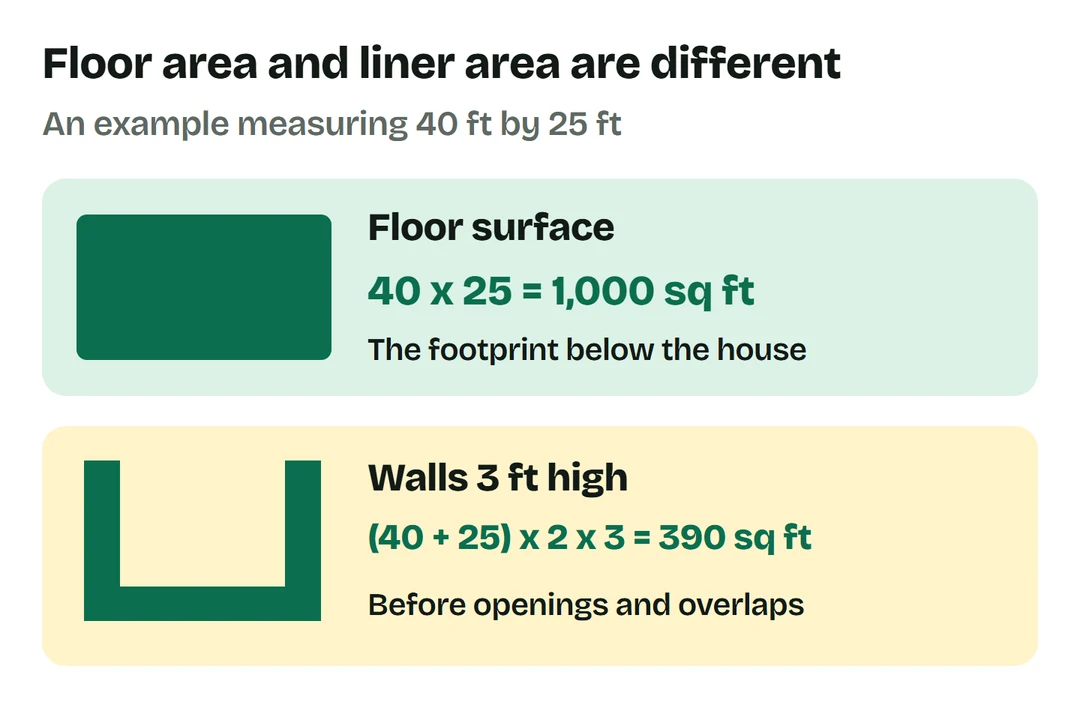
When a contractor gives a rate per square foot, ask whether it uses crawl space floor area or the total surface being lined. Those measurements are different once walls and piers are included.
For example, a rectangular crawl space measuring 40 by 25 feet has 40 × 25 = 1,000 square feet of floor. Walls 3 feet high add (40 + 25) × 2 × 3 = 390 square feet before openings and overlaps.
That is a measurement example, not an installation allowance. Seams, columns, cutouts and the liner’s attachment height affect the actual order. The installer’s quantities should account for them.
Does the Price Include a Dehumidifier?
Sealing the crawl space and drying its air are connected parts of the job. The proposal should identify the humidity-control method, rather than simply promising that the plastic will keep everything dry.
For a standalone unit, get the model, drain arrangement and electrical work specified. Find out how you will reach the filter and check the humidity after installation.
Using DryTek’s approximate circuit allowance, $2,300 + $750 = $3,050, or $2,800 + $750 = $3,550. These are approximate equipment totals, not complete encapsulation prices.
Water collecting on the ground needs its own solution before it is covered. The liner belongs in a moisture-control plan; it should not conceal a plumbing leak or water arriving after rain.
If an existing pump has failed, see our sump pump replacement guide. Creating a drainage system and replacing a pump in a working basin are different purchases.
What Homeowners Paid and Were Quoted
These Garage Journal accounts include the posting dates and the work described. They are older US examples, useful for seeing why the package matters, rather than updating a past bill to today’s prices.
- May 29, 2019: Rich1028 described quotes around $10,000 without wall insulation or $12,000 with it. The post does not give the crawl space area.
- November 12, 2020: b-boy in Buffalo, New York described about $3,500 total for spray foam, a floor-and-wall barrier and an added dehumidifier beneath part of the house.
- November 12, 2020: mikec35 in North Carolina described a $9,800 job paid by the seller, including drains, a sump, sealed vents, a 30-mil liner, a dehumidifier and a circuit.
The North Carolina job also included removing and replacing underfloor insulation and treating the wood. It did not include wall insulation. That difference would disappear if you compared only the two totals.
What About a DIY Encapsulation Kit?
Crawl Space Ninja’s complete DIY kit for approximately 1,500 square feet is displayed at $4,031.70, but the saved store page marks it sold out.
The listed contents include floor liner, wall material, tapes, fasteners, vent covers and a dehumidifier.
The kit allows 2,000 square feet of floor-and-pillar liner plus 500 square feet of insulated wall barrier. That illustrates why buying exactly the floor area in plastic can leave you short.
The store price is for the kit, not a finished job. Check availability and delivery terms, then account for preparation, tools, labor and electrical work. A kit cannot tell you whether the house needs drainage or wood repairs first.
I would leave the design to someone who can inspect the space if there is standing water, damaged framing or a fuel-burning appliance below the house. Sealing around equipment can change the air available for combustion.
Before You Accept the Proposal
Ask what the price excludes: existing damage, drainage, electrical work and any work needed at the entrance. Agree how hidden problems will be photographed and approved before they become extra charges.
For the warranty, ask which parts it covers and whether inspections or equipment servicing are required. Keep the final layout and installation photographs so future plumbing work does not leave the liner unsealed.
Questions About Sealing a Crawl Space
Is Encapsulation the Same as a Vapor Barrier?
A ground barrier can be one component. Full encapsulation joins the floor covering to walls and piers, closes openings and provides a way to control moisture in the enclosed air.
How Much Does a 1,500-Square-Foot Crawl Space Cost to Encapsulate?
DryTek’s Delmarva guide gives $13,500 to $18,000 or more for that size of home. Ask what its proposal includes, especially equipment, preparation and drainage.
What Liner Thickness Comes in the DIY Kit?
Crawl Space Ninja’s kit includes a 12-mil liner for the floor and support pillars, plus a separate insulated wall barrier.
Does the Dehumidifier Need a New Circuit?
That depends on the existing electrical service and the equipment. DryTek’s installation range assumes suitable power is present; it identifies a dedicated circuit as an extra when needed.
I hope this helps you see what is behind an encapsulation quote. If you would like to share the work and price for your house, email costcheckr@gmail.com.
Where These Prices Come From
Prices checked October 24, 2026. You can use the contractor and store figures as US planning examples; homeowner prices retain their original posting dates.
- DryTek Crawlspace Solutions: Delmarva pricing guide, updated October 15, 2026.
- Crawl Space Ninja: complete DIY kit, displayed price and material quantities.
- Garage Journal: encapsulation with or without insulation, dated accounts linked above.
- Department of Energy: crawl space ground barriers.
- Department of Energy: rooms with fuel-burning appliances, combustion air considerations.