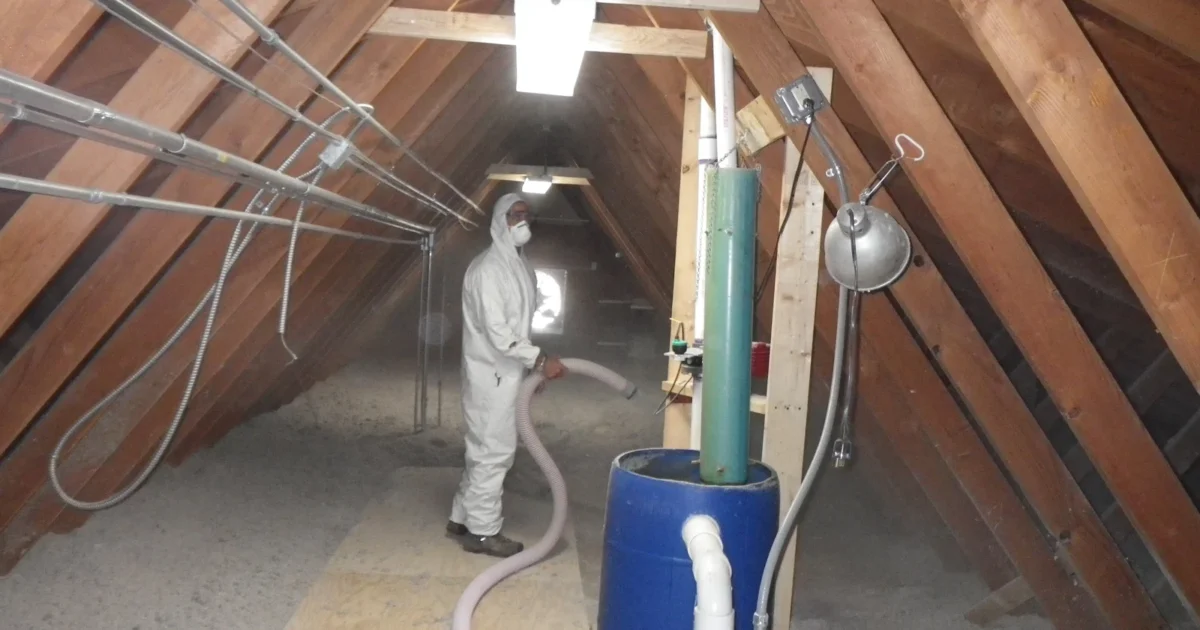
If the old insulation in your attic is wet, flattened or full of animal mess, another layer on top may not be the job you need. The bill can include taking it out, cleaning the space and sealing gaps before new material goes in.
So replacing attic insulation costs $3,000 to $6,750 for a 1,500-square-foot attic in Pro Attic Tampa’s published example. That covers removal and new blown-in insulation; confirm cleanup and air sealing in your quote.
I will break down the work by square foot, compare batts with blown-in material, and show what homeowners paid. These US pages were checked October 19, 2026.
What Removal and New Insulation Cost
Measure the attic floor being insulated, not the total living area of a two-story house. Pro Attic Tampa publishes separate rates for taking out the old material and installing the new layer.
Using Pro Attic’s rates, a 1,500-square-foot example is 1,500 × ($1 + $1) = $3,000 at the low end. At the high end, 1,500 × ($2 + $2.50) = $6,750.
JDH’s $2,250 to $5,250 range for 1,500 square feet depends on the R-value target, access, any removal and spray foam. It includes floor air sealing and hauling away removed material.
These are different companies’ scopes. Do not add the Tampa removal rate to JDH’s package without checking what JDH has already included.
Do You Have to Remove Everything?
Old insulation does not need replacing just because it is old. If it is dry and usable, a top-up may be enough. Pro Attic assesses moisture, pests and the condition of the existing layer before recommending removal.
Deal with the roof leak or animal entry point before adding insulation. Ask the contractor to include removing the affected material and cleaning the attic in your quote.
There is one exception to ordinary removal advice: EPA recommends leaving vermiculite insulation undisturbed because it may contain asbestos.
If that material is present, get an asbestos professional’s advice before anyone vacuums, bags or covers it. A routine insulation-removal price is not an asbestos-abatement quote.
Blown-In Insulation or Batts?
Blown-in material can fill around irregular attic framing without cutting a piece for every space. Batts are fitted blankets; their size and placement need to suit the joists and obstacles.
JDH offers both within its published attic range, rather than a separate fixed rate for each. Compare bids at the same R-value and with the same removal and sealing work included.
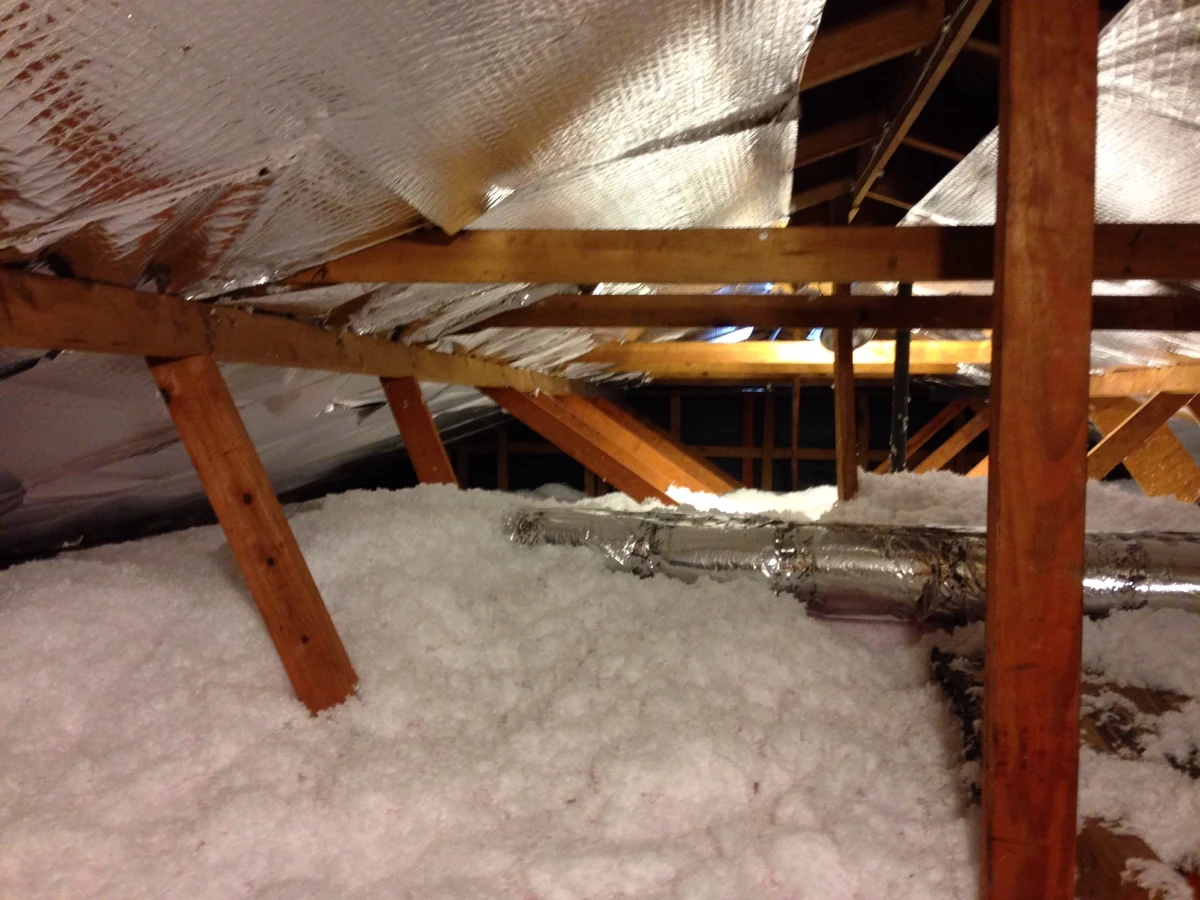
A low material price alone tells you little about the finished job. Gaps around framing, compressed batts and thin patches can leave you with less insulation than the product label promises.
Air Sealing Comes Before the New Layer
Insulation slows heat flow; it does not close every hole between the rooms and attic. ENERGY STAR’s attic guide identifies gaps around walls, dropped ceilings and kneewalls.
Have those areas assessed while they can still be reached. The attic hatch also needs attention, and ventilation paths at the eaves must remain open when the new insulation is fitted.
I would ask for the quote to state the attic area, material, finished R-value, removal, cleanup, air sealing and hatch work. Also settle who repairs any temporary access opening and takes the waste away.
How Much R-Value Should You Buy?
R-value measures resistance to heat flow. The right target depends on climate and the existing insulation. A completely cleared attic starts from a different point than one receiving a top-up.
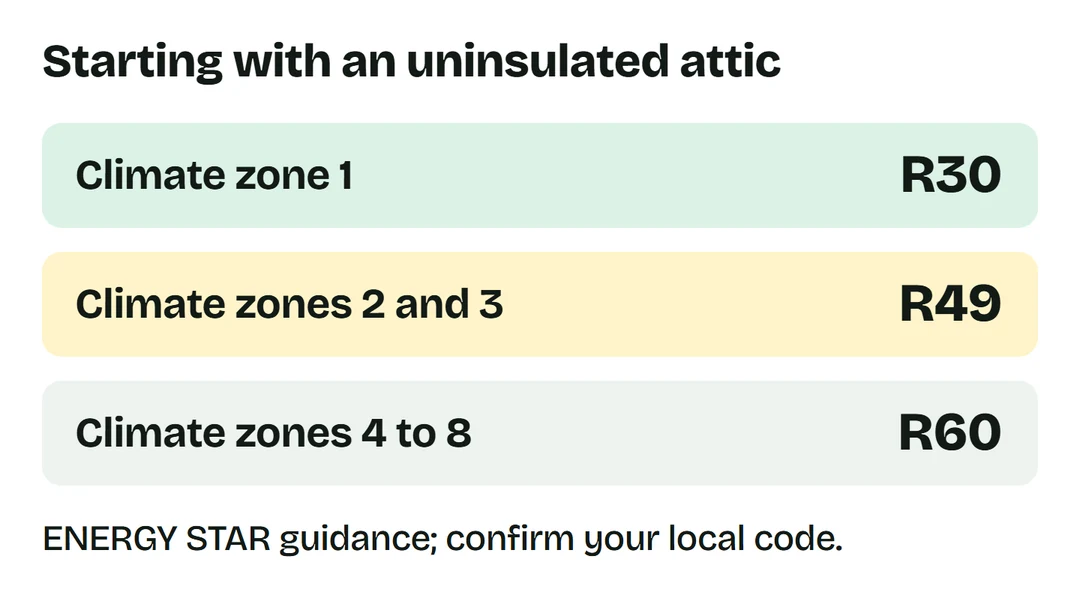
For an uninsulated attic, ENERGY STAR’s climate-zone table recommends R30 in zone 1, R49 in zones 2 and 3, and R60 in zones 4 through 8.
That table is based on the 2021 IECC. Find your climate zone on its map and have the contractor confirm the local requirement. Use the product’s coverage chart for depth and bag count; one inch is not the same R-value in every material.
What Homeowners Paid or Were Quoted
Three accounts in a September 2023 DC Urban Moms discussion show how access and removal change the job:
- On September 13, an owner with a 640-square-foot attic received quotes of about $3,800 and $11,000. Both included removal, air sealing, baffles, R49 cellulose, hatch insulation and a temporary access hole.
- On September 20 at 12:49, another owner reported $2,900 for adding cellulose, sealing exposed ceiling-fan junction boxes and adding eave vents. The existing cellulose stayed.
- On September 20 at 22:26, a DC owner reported about $5,000 for a 1,200-square-foot attic, including sealing. A separate company charged $800 for an opening without stairs; removal was not specified.
The smaller attic had the widest spread in quotes. A difficult section that needs a new opening can matter more than the floor area alone.
Questions Before Replacing Attic Insulation
How Long Will the Work Take?
JDH describes a typical 1,500- to 2,500-square-foot attic as a one-day job. Extensive removal, spray foam at kneewalls or other added work can take it into a second day.
Does Removing Insulation Include Pest Treatment?
Do not assume it does. Removal, cleaning and closing animal entry points are separate tasks unless your contractor includes them in the package.
Where These Prices Come From
US sources checked October 19, 2026. Homeowner figures are September 2023 reports.
- Pro Attic Tampa: removal and replacement rates.
- JDH Remodeling: Maryland and Virginia attic packages.
- ENERGY STAR: R-value table and attic air-sealing guide linked above.
- EPA: vermiculite guidance linked above.
- DC Urban Moms: attic insulation quotes and bills.
I hope this helps you budget for the work your attic needs. You can send a quote or question to costcheckr@gmail.com.