
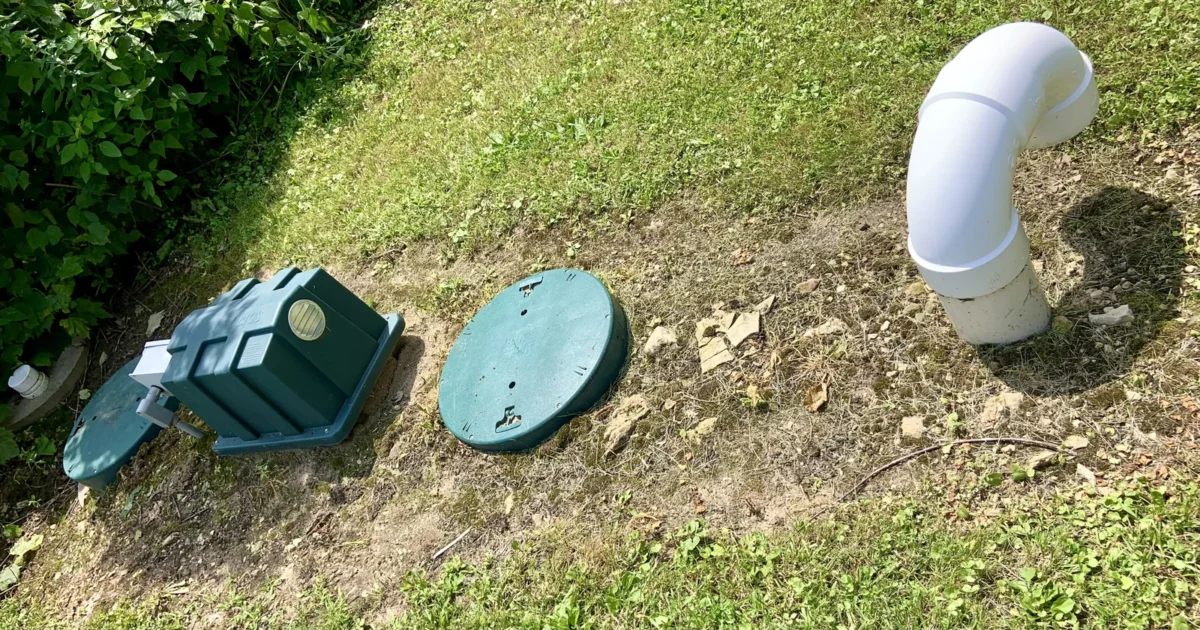
You know the tank needs pumping, but the price on the phone changes once someone asks about its size, buried lids and the distance from the driveway. Those details can turn a simple service call into a bigger bill.
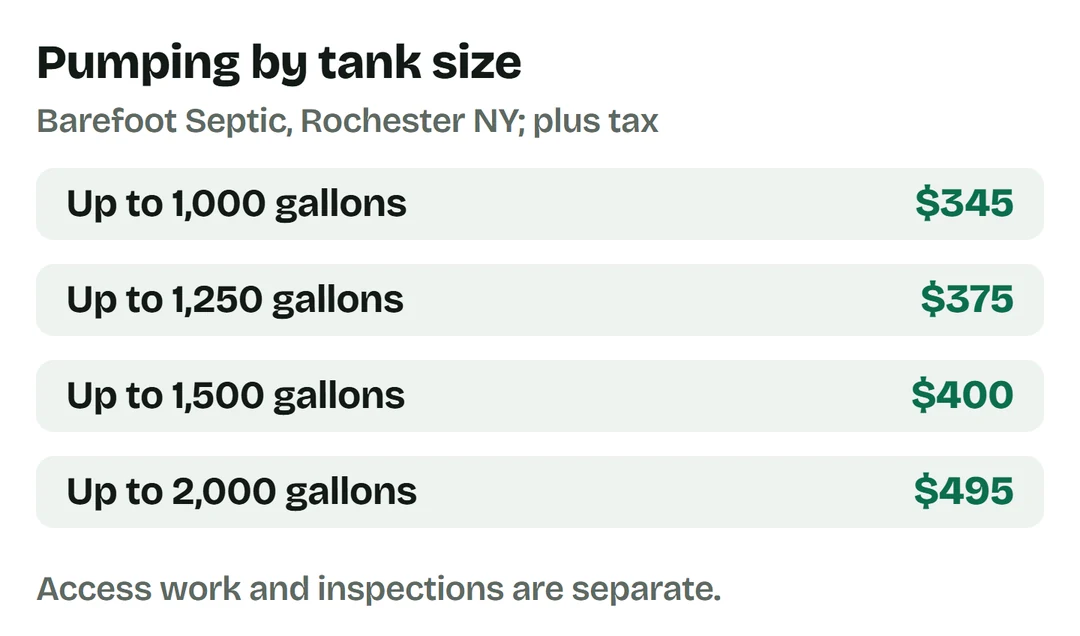
So septic tank pumping costs $345 to $495 plus tax at Barefoot Septic & Sewer near Rochester, New York, for its published tank sizes up to 1,000 through 2,000 gallons.
I checked the size brackets, access charges and homeowner reports below so you can tell what your quote actually includes. This is routine tank emptying; it is separate from replacing a failed septic system.
Pumping Prices by Tank Size
Barefoot’s menu took effect January 1, 2026. These are its pumping charges before tax, checked October 24, 2026:
Ask which size bracket applies to your tank and whether the company bills by tank capacity or gallons removed. Barefoot’s full-load rate belongs to a different volume of work from a household pump-out.
For another published menu, Redding Septic Service charges $380 for residential tanks of 1,000 gallons or less. Its lower commercial rate is a separate category, so I have kept it out of the household comparison.
What Access and Extra Work Add
A lid at ground level is easier to reach than one buried under the yard. Find the service record or tank plan before booking, and tell the pumper whether the access covers are exposed.
Barefoot’s hand digging starts at $40 per cover. For one cover on Barefoot’s up-to-1,000-gallon service, the starting sum is $345 + $40 = $385, with applicable tax still to add.
Redding’s menu handles extra work differently:
Have the company include the tank size, all compartments, hose reach, access work, disposal and any travel charge in the booking price. A short hose run with open lids should not be compared with an excavation call.
Pumping Is Not the Same as a Full Inspection
The EPA explains that a service provider checks for leaks and measures the scum and sludge layers during a visit. That does not mean every pumping appointment includes a property-sale inspection or a drain field assessment.
Barefoot has a separate septic inspection price of $340 plus tax. Ask what report and testing it includes before treating a pumping receipt as proof that the whole system is sound.
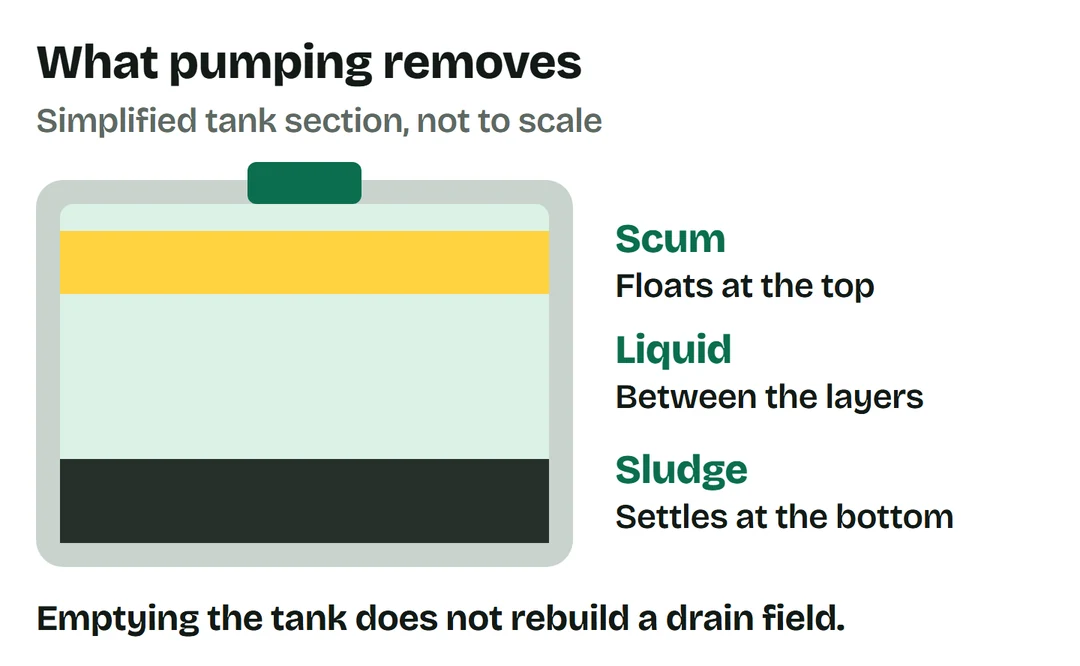
Pumping takes accumulated material out of the tank. If the tank is broken or the field cannot accept wastewater, emptying it does not rebuild either part. Our septic tank replacement guide covers those larger jobs.
What Homeowners Paid
Three US members of The Garage Journal described their service in a discussion dated November 6, 2025. Their tank sizes and access details help explain the differences:
- An eastern North Carolina homeowner reported $300 for pumping. Distribution-box, outlet-pipe and filter work was another $800, separate from pumping.
- A Fernley, Nevada member described a 1,500-gallon tank and about $500 with both lids exposed. The post does not give a precise service date.
- A Pennsylvania homeowner recalled $315 for two chambers of 1,000 and 500 gallons, pumped about two years before the post.
I would use those details to ask better questions about a current quote. The North Carolina repair bill, for example, should not be folded into the price of emptying the tank.
How Often Should You Pay for Pumping?
The EPA’s general guidance is to inspect a household system at least every three years and pump the tank typically every three to five years. Household size, wastewater volume, solids and tank size affect that timing.
Systems with pumps, float switches or other mechanical parts generally need inspection every year. Your local requirements and the measured sludge and scum levels should guide the schedule for your home.
Keep the service receipt with the tank location and the pumper’s findings. That gives the next visit a useful starting point instead of relying on how long the drains have seemed fine.
Barefoot asks someone to be home for a backup call so it can check that the toilets flush and wastewater flows after service.
Questions About Septic Pumping Bills
How much is pumping a 1,500-gallon septic tank?
Barefoot Septic & Sewer’s up-to-1,500-gallon bracket is $400 plus tax. The Nevada owner above described about $500 with both lids exposed in a November 2025 post.
Does digging come with the pumping price?
Check the access allowance. Barefoot starts hand digging at $40 per cover, while Redding charges $50 per 6 inches of depth, up to its stated 24-inch maximum.
Does pumping fix a bad drain field?
Pumping removes material from the tank. A field that cannot accept wastewater needs its own diagnosis; repeated emptying does not restore the soil treatment area.
Do I need to pump every year?
The EPA’s typical household interval is three to five years. Inspection may be more frequent, especially for systems with mechanical components, and local rules can require another schedule.
Where These Prices Come From
- Barefoot Septic & Sewer, Tips & FAQ, Rochester, New York service area, menu effective January 1, 2026; checked October 24, 2026.
- Redding Septic Service, Pricing, residential pumping and extra work; checked October 24, 2026.
- EPA, How to Care for Your Septic System, service intervals and tank measurements; checked October 24, 2026.
- The Garage Journal, homeowner posts dated November 6, 2025, linked above; checked October 24, 2026.
I hope this helps you book the service your tank needs without mixing pumping and repair costs. If you have a question about your bill, email me at costcheckr@gmail.com.