Your coolant level keeps dropping but you cannot find a puddle, the coolant tank boils over after a drive, or the temperature needle creeps up in traffic. A tired radiator cap is the cheapest part that can cause all of that.
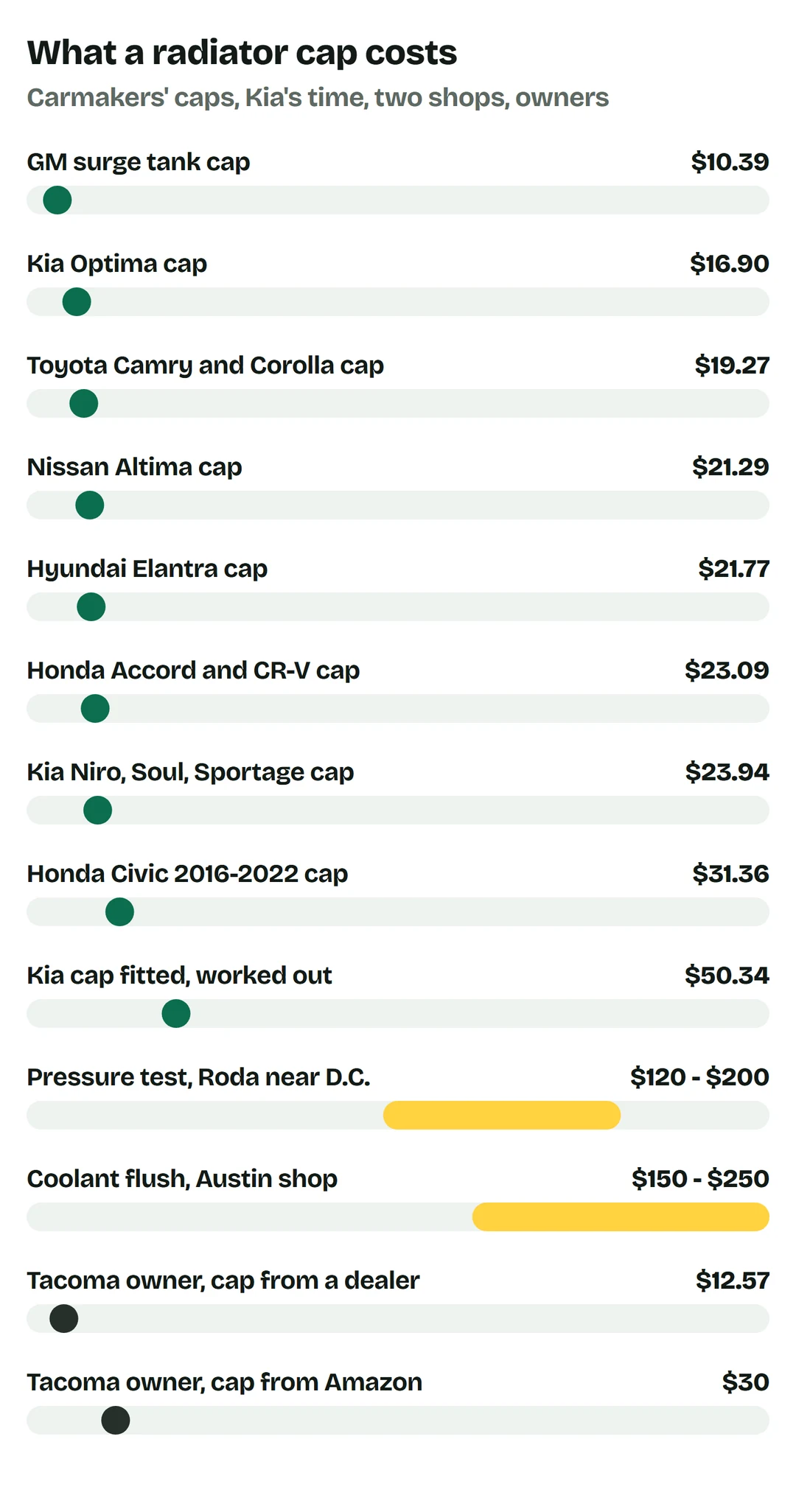
So how much does a radiator cap replacement cost? The carmakers’ own caps are $10.39 to $31.36 at their parts websites, and on a cold engine the old cap twists off and the new one twists on.
If you take the car to a shop, expect a cooling system test first. Roda, a repair service near Washington, D.C., charges $120 to $200 for a coolant system pressure test.
In this guide I will show you what each carmaker’s cap costs, what a shop charges, what Kia pays its dealers to fit one and what owners paid. I will also show you the signs that the problem is bigger than the cap.
What the Carmakers’ Own Caps Cost
These are the genuine caps for some popular cars, priced at the carmakers’ parts websites on October 15, 2026:
Each carmaker uses several caps, so check the number for your car by the VIN. The list prices are higher, from $20.70 for the GM cap to $44.30 for the Civic cap.
Radiator Cap or Coolant Tank Cap?
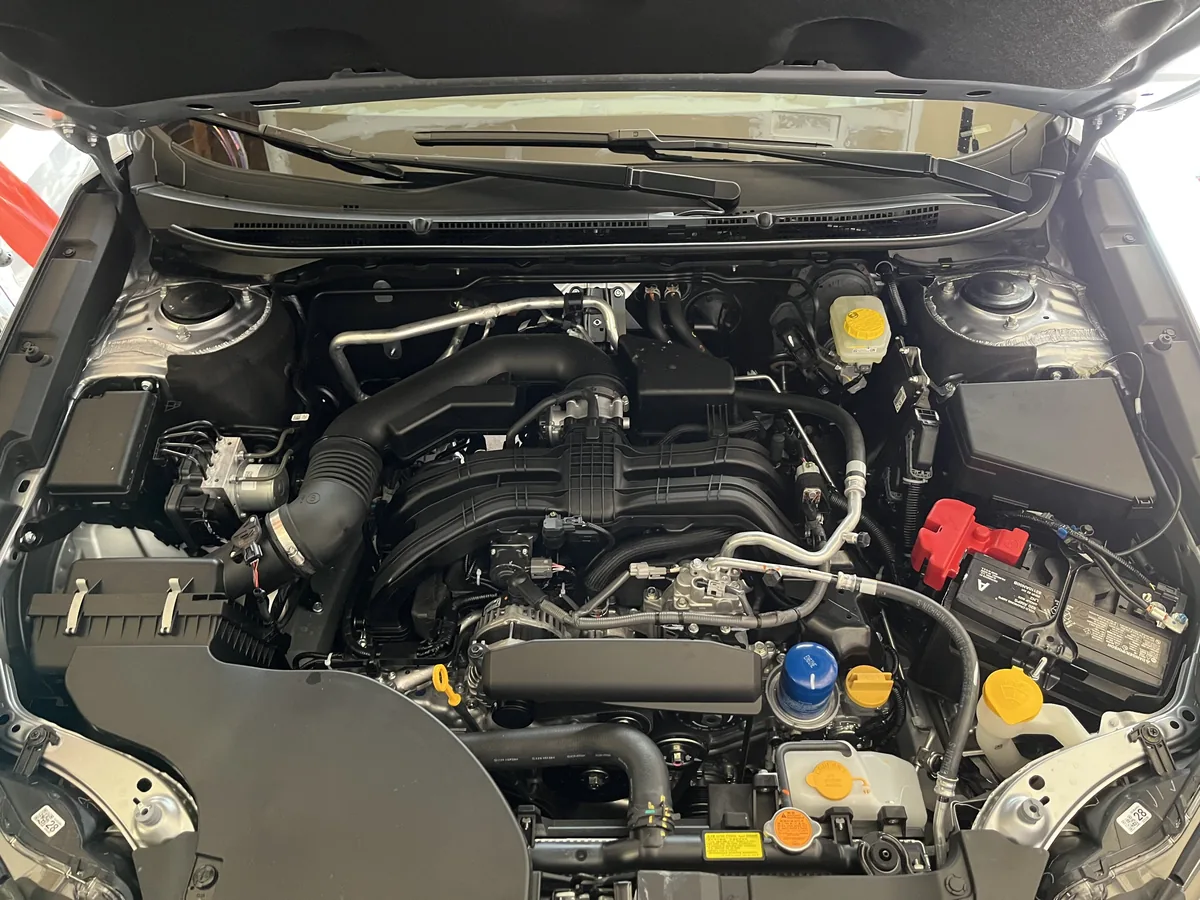
On many newer cars the pressure cap sits on the coolant tank, not on the radiator. GM calls its cap a radiator surge tank cap, and Honda’s cap for the 2016 to 2022 Civic is a reservoir cap. Both do the job of a radiator cap.
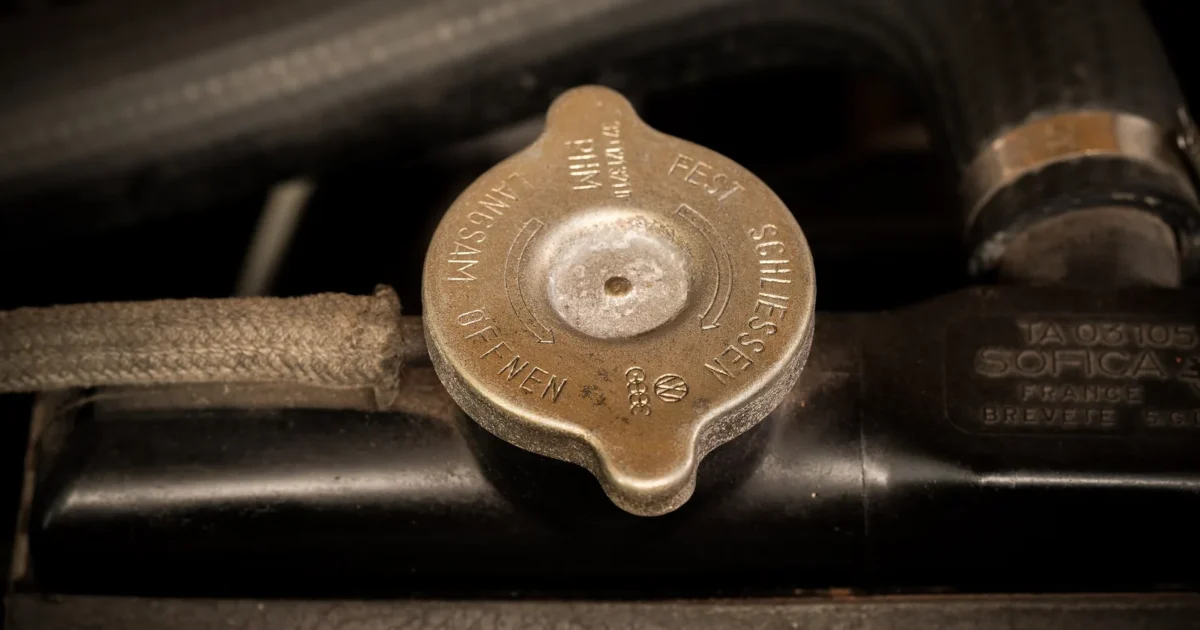
The spring inside the cap holds the cooling system under pressure, which raises the boiling point of the coolant. Luxury Auto Works, a repair shop in Austin, Texas, writes that a weak cap lowers that boiling point and invites boil-over.
That is why the pressure rating matters. The Austin shop matches caps to each car’s pressure rating, and I advise you to buy the carmaker’s part number from a dealer or a dealer’s parts website.
One Tacoma owner bought a “Toyota Genuine” cap on Amazon for $30 in November 2021. It leaked coolant, and its spring bottomed out at about 9 pounds, well under the cap it replaced.
What a Shop Charges
Fitting a cap takes a minute, so a shop’s bill is mostly the testing and whatever else it finds. These are the prices from Roda and the Austin shop:
Roda’s price depends on how far the test goes, from a basic pressure test to a full check of the system and the radiator cap. The Austin shop tests caps for their relief pressure and checks the system cold and hot.
Its Lexus page puts the cap in plain words: “A $15 cap or a $5 clamp can save a water pump or head gasket.”
What Kia’s Own Bulletin Shows
Kia found that some 2023 Seltos SUVs built between October 26 and November 11, 2022 may have left the factory with a metal coolant tank cap instead of the plastic one. Its bulletin SA527 lists 18 VINs.
Kia pays its dealers 0.2 hour to inspect and replace the cap, and the right cap, 25330-D9000, is $23.94 at a Kia parts website.
With Kia’s part and time at $132 an hour, Tekmetric’s US average from June 2026, that comes to $23.94 + $26.40 = $50.34.
I take that as a fair guide to what fitting a cap should cost at a shop, before any testing. Bulletins about caps are hard to find: I searched the carmakers’ bulletins for 47 popular models from 2010 on and found none.
What Owners Paid
A Tacoma owner ordered a genuine Toyota radiator cap from a Toyota dealer for $12.57 in July 2020. In a thread about a shop that forgot to put the cap back after a coolant flush, another member put a new cap at under $10 in September 2024.
The bigger bills come when the cap was only part of the problem. Here is what owners told NHTSA, the US road safety agency, with a link to each complaint:
- A Mazda dealer blamed a bad radiator cap on a 2017 CX-9 that was losing coolant, and the new cap fixed the overheating at first. When it came back, a mechanic found a leak from the engine block and quoted over $6,000, filed in June 2024.
- A Chevrolet dealer replaced the coolant tank and radiator cap on a 2013 Cruze at no cost, two weeks after a $1,600 water pump job. It then found engine damage: about $4,200 for a new cylinder head or $8,000 for a new engine, filed in July 2019.
- A Nissan dealer found a milky radiator cap on a 2008 Pathfinder that shifted roughly, a sign that coolant and transmission fluid had mixed. It quoted $6,400 for a transmission, radiator, cooler and thermostat, filed in June 2015.
So a cap costs about $10 to $31 when the cap is the fault, while a cap that hides a bigger leak can be followed by a bill in the thousands.
Signs of a Bad Radiator Cap
Look for coolant loss with no leak you can see, coolant pushing out of the overflow tank, or an engine that runs hot.
A Tacoma World member who ran a radiator shop wrote that a bad cap or its sealing surface can cause overflow even when the engine is not overheated.
Another sign is a pink or orange crust of dried coolant near the cap or the tank, which the Austin shop looks for.
For crust at the cap, one owner on the same forum advises a new cap, cleaning off the residue and watching the level for a few weeks.
Some signs point past the cap. On a 2018 Pacifica whose coolant tank hissed with pressure even when cold, a Chrysler dealer tested for exhaust gas in the coolant and found a failed head gasket.
On a 2012 Kia Sorento, the Kia dealer said overheating had melted the radiator cap, so the cap was a result, not the cause. That owner paid $14,000 for a radiator and a used engine.
How to Replace a Radiator Cap
Wait until the engine is fully cold. The Austin shop warns never to open a hot radiator or reservoir cap, because scalding coolant under pressure can cause serious burns.
Take the old cap off, fit the new one and turn it until it locks. One Tacoma owner reminds others that the Tacoma’s cap twists on and then needs one more turn to seal properly.
Top up the coolant if it is low, then check the level again after a few drives. If it keeps dropping with a new cap, have the system pressure tested.
Radiator Cap Questions You Might Have
How much does a radiator cap replacement cost?
The carmakers’ own caps are $10.39 to $31.36 at their parts websites, and you can fit one yourself on a cold engine. A shop’s coolant system pressure test is $120 to $200 at Roda near Washington, D.C.
How do I know if my radiator cap is bad?
Coolant loss with no visible leak, coolant pushing out of the overflow tank, overheating, or dried coolant around the cap. A pressure test checks the cap’s relief pressure.
Can I drive with a bad radiator cap?
A weak cap lowers the boiling point of the coolant and can let the engine boil over, so replace it soon and watch the temperature gauge until you do.
How long does it take to replace a radiator cap?
A few minutes once the engine is cold. Kia pays its dealers 0.2 hour to inspect and replace a coolant tank cap.
Is the coolant tank cap the same as a radiator cap?
On many newer cars, yes. GM, for one, puts the pressure cap on the coolant tank, and it does the same job as a radiator cap.
Can I use any radiator cap that fits?
Use your carmaker’s part number. Caps have different pressure ratings, and a Tacoma owner’s cap from Amazon leaked with a spring far weaker than the one it replaced.
Where These Prices Come From
- Part prices, checked October 15, 2026: GMPartsGiant 13502353, KiaPartsNow 25330-1P000, ToyotaPartsDeal 16401-36030, NissanPartsDeal 21430-8991A, HyundaiPartsDeal 25330-B1000 and HondaPartsNow 19045-RAA-003 and 19045-59B-005.
- Roda, Coolant System Pressure Test, read October 15, 2026. Luxury Auto Works, Austin, Coolant Leak Repair (February 2026), Coolant Flush and Lexus Coolant Reservoirs (updated August 28, 2026).
- Kia technical service bulletin SA527 (February 2023), on NHTSA’s website, KiaPartsNow 25330-D9000, and Tekmetric, Average Auto Repair Labor Rates by State, June 30, 2026.
- The owner posts on Tacoma World and the NHTSA complaints linked above, read October 15, 2026.
I hope this helps you fix the cheap part first, and spot it early if the problem is bigger. If you have any questions, you can email me at costcheckr@gmail.com.