The service advisor says your brake fluid is due, or the brake pedal feels softer than it used to. A brake fluid change is a small job, but the price on the bill can vary a lot, so here is what it should cost.
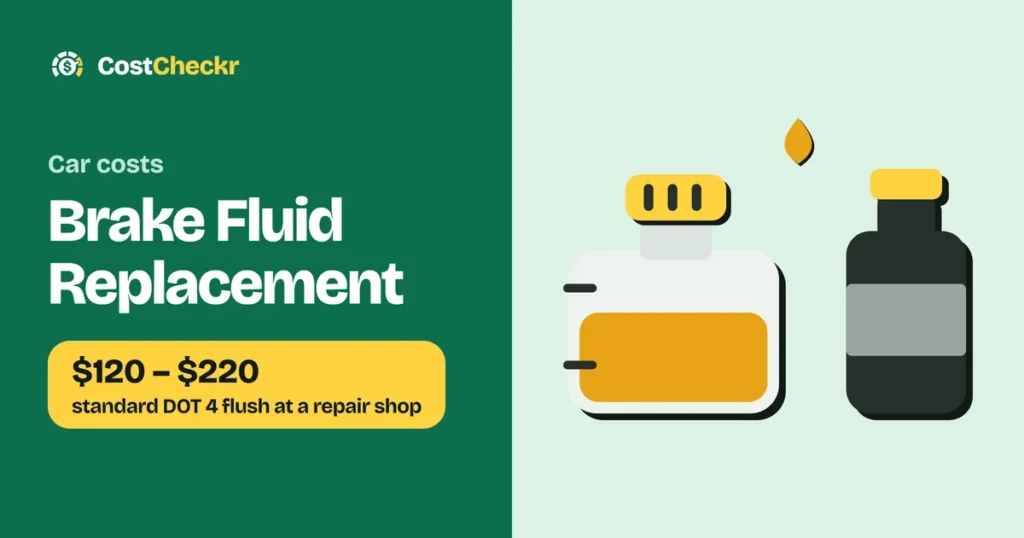
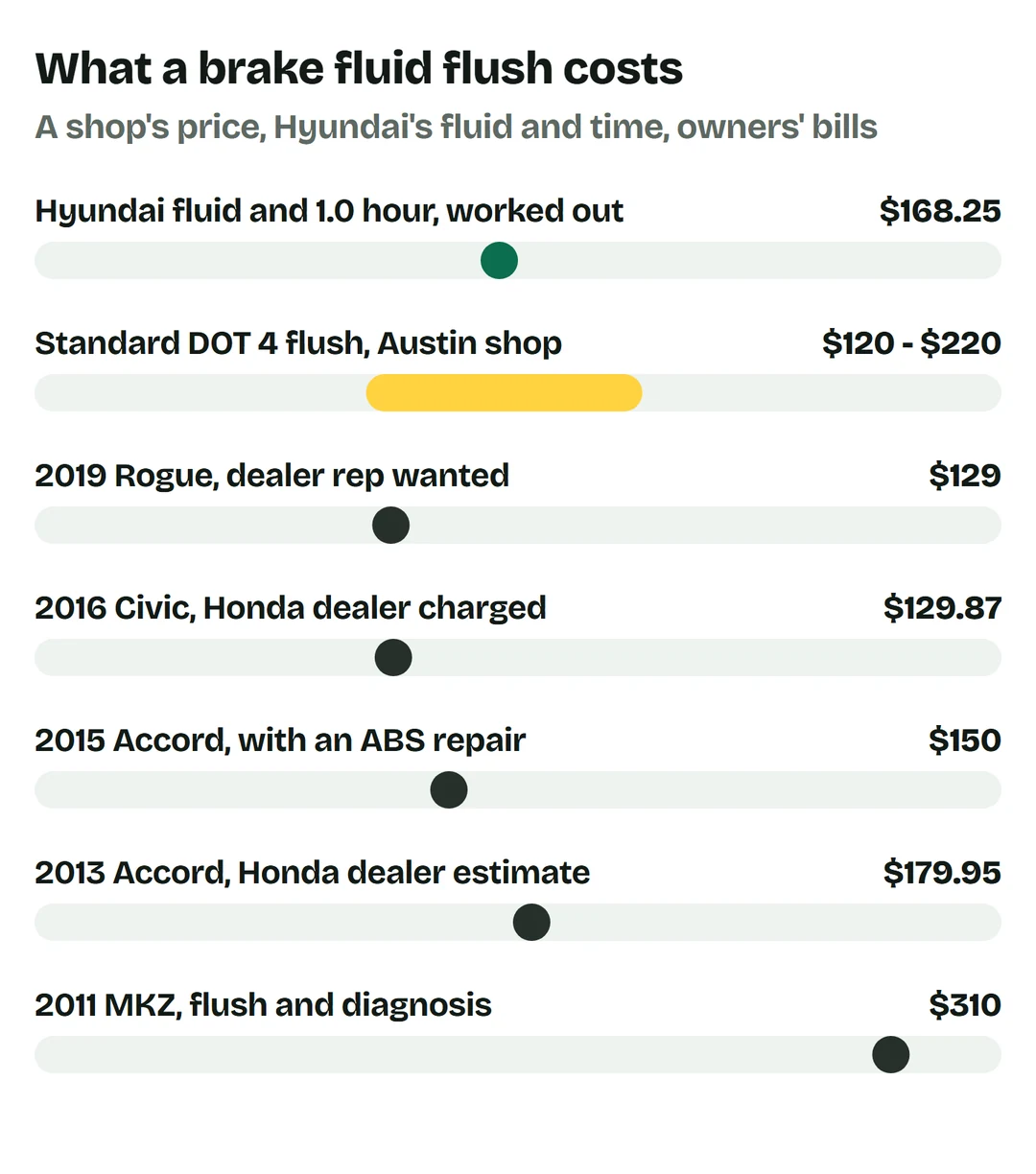
So how much does it cost to replace brake fluid? At Luxury Auto Works, a repair shop in Austin, a standard DOT 4 brake fluid flush typically costs $120 to $220 and takes about 45 to 90 minutes.
Dealers charged or quoted owners $129 to $179.95 for the same job, owners told NHTSA, the US road safety agency. With Hyundai’s own fluid and job time, a full fluid change comes to $168.25.
In this guide I will show you what shops, dealers and carmakers charge or pay. I will also show you why old or wrong fluid can cost you an ABS unit, how often to change it, and how to skip a flush you do not need.
What Dealers Charged Owners
Here is what owners told NHTSA they were charged or quoted, with a link to each complaint:
- A Honda dealer charged $129.87 for a brake fluid flush on a 2016 Civic in October 2021, which the owner says was never approved, filed in August 2022.
- A dealer’s service rep wanted $129 for a brake fluid change on a 2019 Nissan Rogue whose fluid had been changed at 38,000 miles, filed in August 2021.
- An ABS repair on a 2015 Accord at a Honda dealer needed a $150 brake fluid exchange as well, filed in April 2024.
- A Honda dealer’s estimate for a 2013 Accord listed the brake flush at 0.8 hour of labor, $179.95, filed in July 2024.
So dealers charged or quoted $129 to $179.95, close to that shop’s range. A Ford dealer quoted $310 for a 2011 Lincoln MKZ, but that price included the diagnosis, filed in June 2024.
What the Carmakers’ Fluid and Times Come To
Hyundai recalled 43,500 2009 to 2012 Genesis sedans because their factory brake fluid may not protect the ABS control unit against corrosion. Dealers replaced the fluid free and were paid 1.0 hour to inspect the unit and change the fluid.
The job needs about 1.8 liters of DOT 4, five 12 ounce bottles. With Hyundai’s fluid on a dealer parts website, checked October 13, 2026, and $132 an hour, Tekmetric’s US average from June 2026:
So a full brake fluid change comes to $168.25, inside the shop’s range. On most cars the fluid is a small part of the bill and the labor is the rest.
Why Old or Wrong Brake Fluid Costs More Later
Brake fluid takes in moisture from the air, even in a closed system. Water lowers its boiling point, so under hard braking the fluid can boil and the pedal goes soft, Luxury Auto Works explains.
The water also rusts the calipers, the brake lines and the ABS pump from the inside. An ABS unit costs far more than a flush: the 2013 Accord’s ABS module above was $3,335.49 with labor.
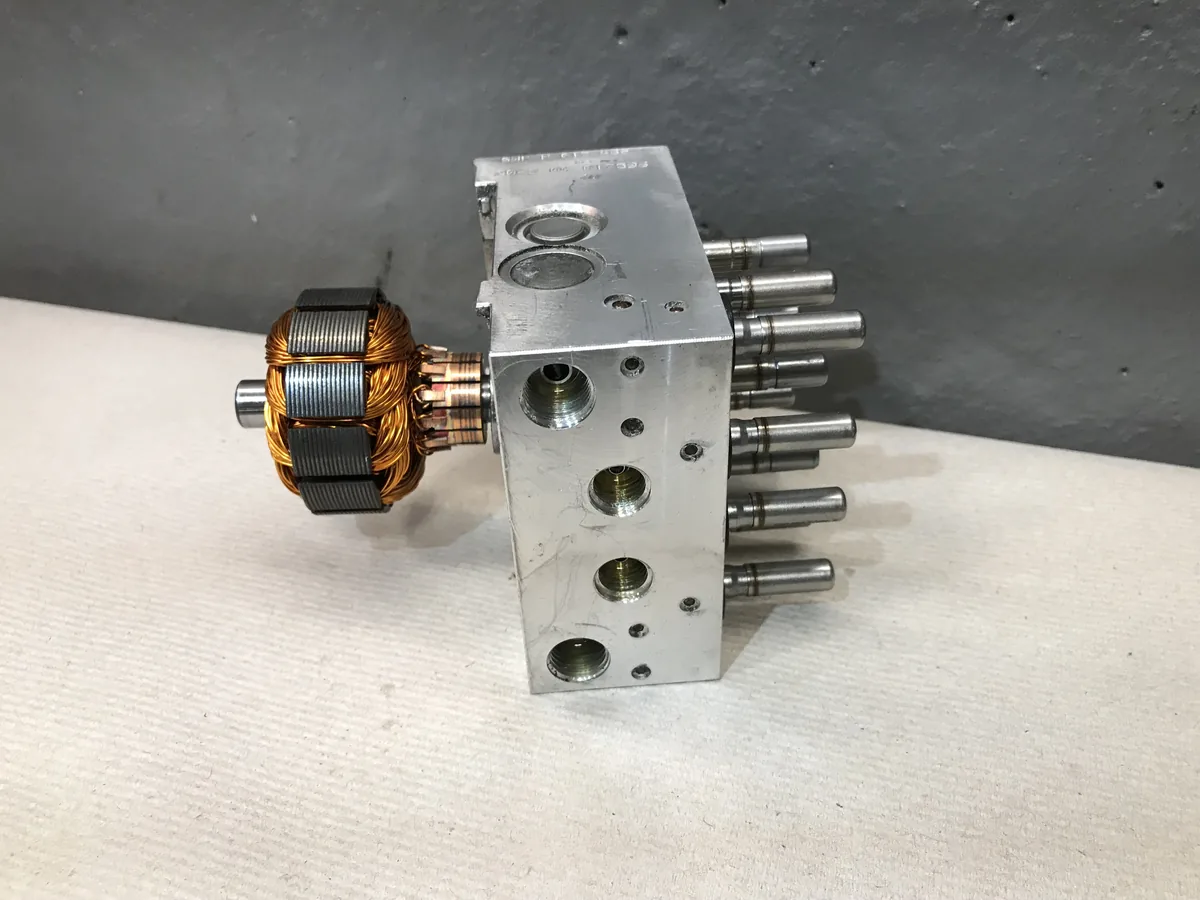
The type of fluid matters too. In some Nissans, DOT 3 fluid can form a gel on a valve inside the ABS unit, and the brake pedal can travel further when the ABS works.
So Nissan changes the fluid to DOT 4 free on 320,616 2010 to 2014 Murano, 2011 to 2014 Murano CrossCabriolet and 2011 to 2015 Quest models. Its dealers also check the ABS unit and replace it if needed.
This is a service campaign, P0A08, not a safety recall, so give your VIN to a Nissan dealer to check it. The visit can take up to 4.5 hours, at no charge for parts or labor.
If you already paid for a new ABS unit because of a soft or low pedal, Nissan can pay you back. Its rules: the ABS light was not on, worn pads were not the cause, and you send the repair order and proof of payment.
Nissan did the same for 89,885 2009 Murano models in 2018, as safety recall R1814.
How Often to Change Brake Fluid
Most European and Japanese luxury carmakers ask for new brake fluid every 2 years, whatever the mileage, by the shop’s count. Some set a time or a moisture limit instead.
The shop’s advice for Austin’s heat and traffic is 18 to 24 months, and sooner if you tow or drive hard. Your owner’s manual or the label on the fluid cap gives the fluid type and the schedule for your car.
How to Skip a Flush You Do Not Need
Ask when the fluid was last changed and what the manual asks for. The Rogue owner above had already had the fluid changed at 38,000 miles when the dealer wanted to change it again.
Ask the shop to test the fluid’s moisture or boiling point before a flush. Luxury Auto Works tests both, so you are not guessing.
Upsells often come bundled. A Kia dealer recommended a brake fluid exchange for a 2017 Optima inside $1,134.10 of extra services, one day after its own inspection had not flagged them, filed in April 2026.
Signs Your Brake Fluid Needs Changing
A spongy or soft pedal, longer stopping distances or a pedal that travels further are the main signs. An ABS warning light or uneven pulsing when you brake can come from old fluid too.
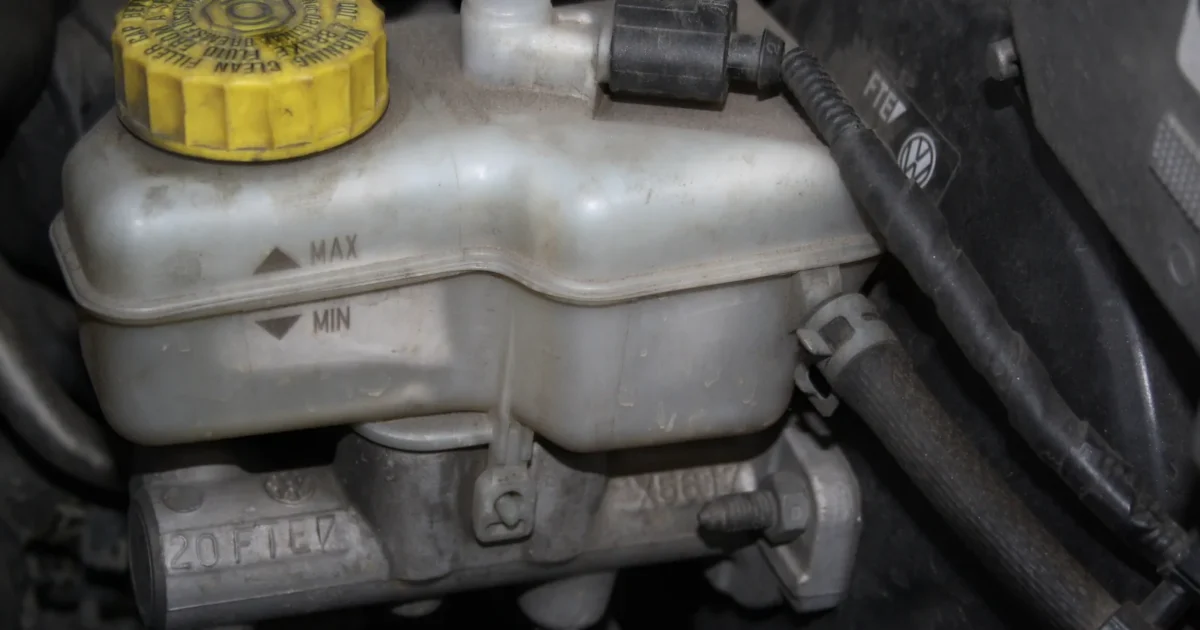
Through the clear reservoir the fluid should sit near the MAX line and look clear to light amber. Dark, cloudy or sludgy fluid, or a hot brake smell after normal driving, means it is time to have it checked, the shop warns.
Brake Fluid Questions You Might Have
How much does it cost to replace brake fluid?
At a repair shop in Austin a standard DOT 4 flush typically costs $120 to $220. Dealers charged or quoted owners $129 to $179.95, and Hyundai’s own fluid and job time come to $168.25.
How long does a brake fluid flush take?
About 45 to 90 minutes at that shop. Hyundai paid its dealers 1.0 hour to change the fluid and check the ABS unit on the Genesis.
How often should brake fluid be changed?
Many carmakers ask for every 2 years whatever the mileage. Your owner’s manual or the fluid cap gives your car’s schedule.
Can I mix DOT 3 and DOT 4 brake fluid?
They are compatible, but mixing can lower the fluid’s performance, and silicone DOT 5 should never be mixed. Use the type your cap or manual names.
What happens if you never change brake fluid?
The fluid takes in water, its boiling point drops and the pedal can go soft under hard braking. The water also rusts brake parts and the ABS unit from the inside.
Where These Prices Come From
- Luxury Auto Works, Brake Fluid Flush, Austin, Texas, February 23, 2026.
- Hyundai recall bulletin 13-01-052 (December 2013) and recall 13V489, and Nissan service campaign P0A08 (revised December 2022) and safety recall R1814 (December 2018), on NHTSA’s website.
- Fluid price, checked October 13, 2026: HyundaiPartsDeal 00232-19053. Tekmetric, Average Auto Repair Labor Rates by State, June 30, 2026, and the owner complaints to NHTSA linked above, read October 13, 2026.
I hope this helps you change your brake fluid on time and at a fair price. If you have any questions, you can email me at costcheckr@gmail.com.